Neck weight vs weight belt: every freediver who adds weight faces this question sooner or later. Should the weight go on the neck or on the hips? Both help you deal with buoyancy. However, they change your body position in different ways. This guide explains how each one works, where it makes sense and why many freedivers end up using both.
Neck weight vs weight belt: why placement matters
On a full breath, your lungs and chest are the most buoyant part of your body. A wetsuit adds buoyancy everywhere it covers you. How much weight you need is only half of the question. Where you put it decides how you move. You either glide in a straight, horizontal line, or swim at an angle and spend energy just to stay level.
Think of your body as a seesaw. Weight near the chest brings the upper body down. Weight at the hips brings the middle and the legs down. The right setup is the one that leaves your body balanced at the depth where you dive.
The weight belt: the classic choice
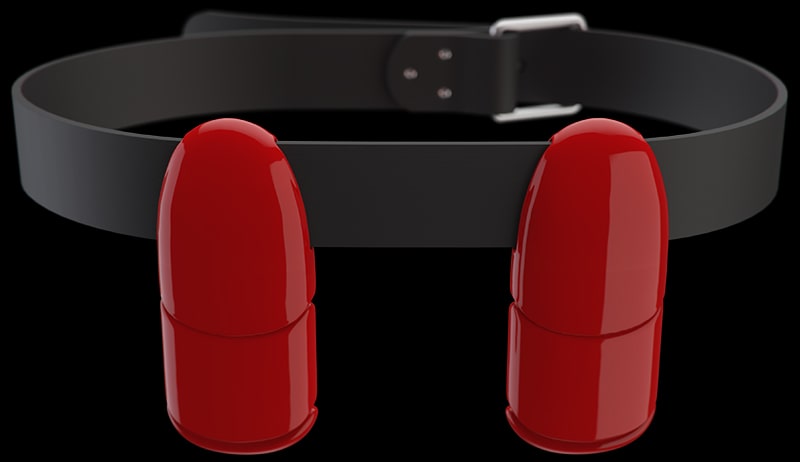
A weight belt is the traditional way to carry lead in freediving. It is usually a rubber belt with a quick-release buckle, worn low on the hips rather than around the waist.
- Easy to ditch. A good belt opens with one pull, so you or your buddy can drop the weight at the surface in an emergency.
- Works for most disciplines. It is the standard in depth freediving and spearfishing, and it is common in the pool too.
- Weight sits at the centre of the body, which helps if your legs and hips tend to float, for example in a thick wetsuit.
The downsides: a belt can slide towards the chest when you dive head-down. It can also rotate and press on the belly. If you wear it too high, it limits the movement of the diaphragm. Rubber belts help because they stretch and stay snug as the wetsuit compresses at depth, but placement still needs attention.
The neck weight: weight where the buoyancy is
A neck weight sits on the upper back and shoulders, close to the lungs. It brings down the part of the body that floats the most. That is why it is so popular in the pool.
- Better trim in dynamic disciplines. In DYN and DNF a neck weight helps you hold a flat, streamlined position during long glides.
- Nothing on the belly. Without a belt around the waist, breathing up and the first moments of the dive can feel freer.
- Stays in place. A well-shaped neck weight does not slide around the body the way a belt can.
The downsides: a poorly designed neck weight hangs from the neck, presses on the throat or gets in the way of equalisation. It is also slower to remove than a belt with a quick-release buckle. Design matters a lot here. The Lobster neck weight spreads its weight along the upper back. Squid, in turn, is open at the front, so it does not press on the throat at depth.
The Lobster neck weight received a Red Dot Design Award in 2020. In 2021, Cristina Francone also set a CMAS world record in dynamic with bifins while wearing one.
Neck weight vs weight belt in the pool
In the pool you swim at a constant shallow depth, so trim matters more than anything. Many pool freedivers use a neck weight as the main weight. Divers with buoyant hips and legs often add a light belt to bring the lower body level. The same goes for those wearing a thick wetsuit.
A simple test: glide in your normal position without kicking. If your legs sink, move weight towards the neck. If your legs float up, move some weight to the hips.
Neck weight vs weight belt at depth
At depth you need much less weight, because the wetsuit and the air in your lungs compress as you go down. Many instructors teach to be neutrally buoyant at around 10 metres, so you are still positive near the surface on the way up. The weight setup has to be comfortable head-down, at the turn and during equalisation.
A belt worn low on the hips is still the most common choice for depth, because it is quick to drop. A light neck weight designed for depth can help you start the descent and keep a straight line, especially in the first metres. If you combine the two, keep the total light enough to stay positive near the surface.
Depth is exactly the job of Squid. In 2025, Squid ambassador Sanda Delija from Croatia set an AIDA world record at the Mabini Depth Quest.
Using both: a split setup
In the neck weight vs weight belt debate, many divers simply choose both. Splitting the weight between the neck and the hips gives you two ways to adjust your trim instead of one. Many experienced freedivers fine-tune their position simply by moving a few hundred grams from one to the other.
This is where a modular system helps. All Lobster neck weight segments also fit the Lobster Belt Weight bases. As a result, you can move weight between your neck weight and your belt in 100 g steps.
Safety first
Whatever you choose, never freedive alone and always dive with a trained buddy. Practise removing your weights at the surface, and make sure your buddy knows how to do it too. Do not add weight to go deeper faster: being overweighted is a safety problem, not a performance gain. If you compete, check the current rules of your federation, such as AIDA or CMAS, for weights and release systems.
Neck weight vs weight belt: quick comparison
- Weight belt: quick to ditch, works for depth and spearfishing, brings the hips down, can slide or press on the belly.
- Neck weight: best trim in the pool, nothing on the waist, brings the chest down, needs a good design so it does not press on the throat.
- Both: the most precise way to balance your body, especially with a modular system.
Not sure what fits your diving? Read our guide on how to choose a freediving neck weight, compare Lobster for the pool and Squid for depth, or write to us and we will help you choose.